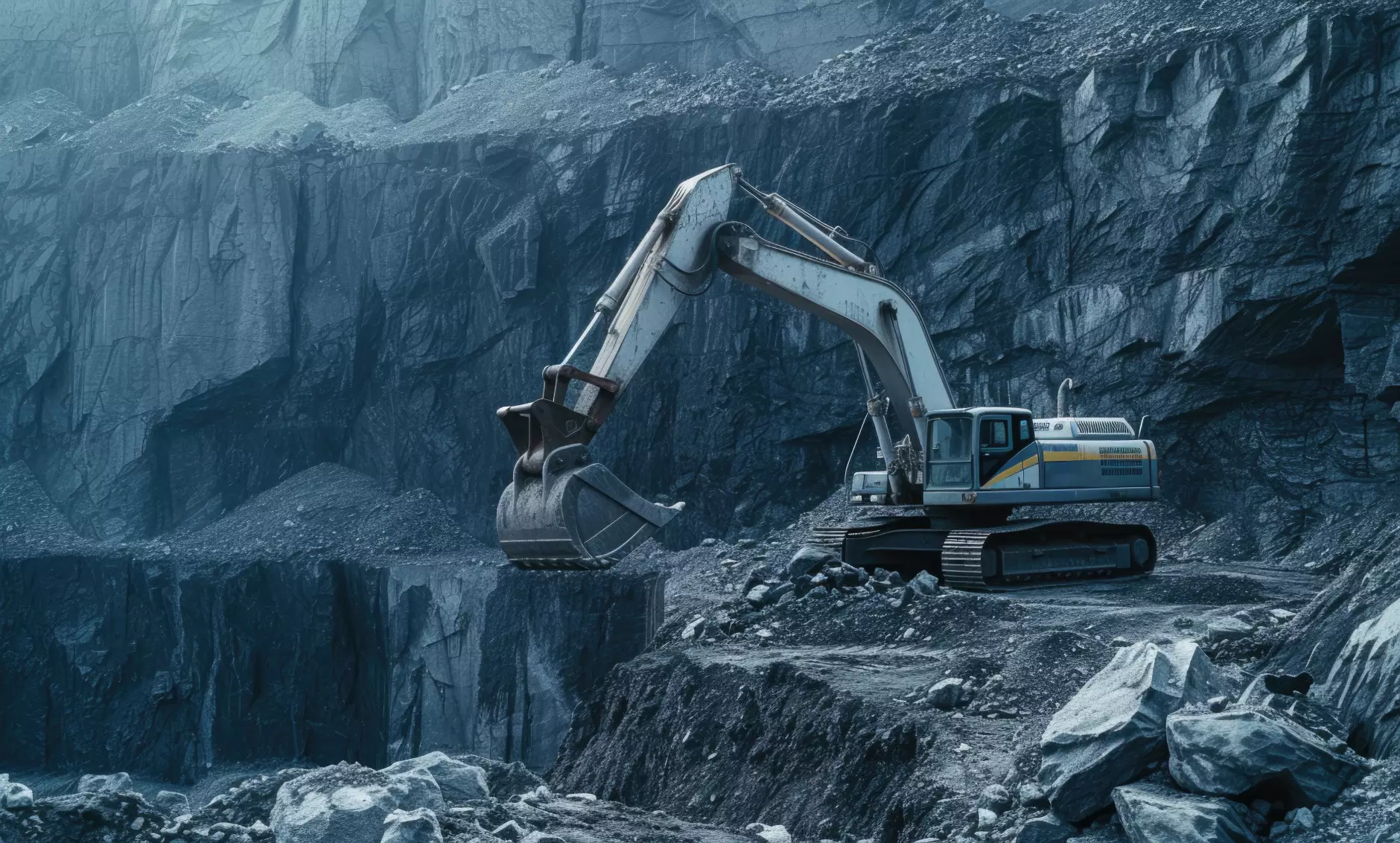
Five years ago, much of what we now consider standard in field operations felt futuristic. Autonomous vehicles operating on mine sites. Live job updates streaming from regional locations. High speed satellite internet delivering connectivity in the middle of nowhere.
Today, it is business as usual.
We drive with Starlink satellite connectivity. Crews upload reports from remote areas in real time. Vehicles are no longer isolated assets. They are connected nodes within broader operational ecosystems.
As highlighted in this coverage of Australia’s digital mine transformation now underway, industries such as mining are rapidly embedding automation, connectivity and data driven systems into everyday operations:
In this environment, technology cannot afford to fail. A dropped connection, a flat device or a poorly mounted tablet does not just inconvenience a crew. It impacts safety, productivity and logistics.
When we think about work technology, we often focus on rugged tablets and enterprise laptops. But what about the systems that support them inside the vehicle?
Because without proper integration, even the most advanced device becomes unreliable.
The Vehicle Has Become a Mobile Workstation
The modern fleet vehicle is no longer simply transport. It is a mobile workstation.
Inside the cabin, teams access mapping platforms, compliance systems, asset databases and dispatch tools. Jobs are logged on site. Equipment is scanned in real time. Supervisors receive live updates without waiting for paperwork to return to the office.
This transformation changes the role of vehicle mounting systems entirely.
When a device becomes central to operations, securing it with a consumer tablet holder is not enough. What is required is an integrated solution designed for commercial environments.
Roaming Tech’s vehicle docks and mounts are engineered specifically for this purpose, supporting rugged tablets and enterprise devices in demanding field conditions:
From Device Mount to Integrated Workstation
Many organisations begin with a simple search for an iPad mount for car use or a tablet holder for vehicles. That approach may work for light duty use. But once you scale across dozens or hundreds of vehicles, the requirement shifts.
You are no longer mounting a device.
You are designing a workspace.
An integrated vehicle dock mount system provides:
- Secure, vibration resistant docking
- Lockable protection for high value devices
- Hardwired charging with clean cable management
- Ignition controlled power
- Support for antenna integration and peripheral connectivity
- A repeatable, standardised installation approach
For high risk environments, installation quality is just as critical as the hardware itself. In mining and other regulated industries, proper integration supports both safety and compliance. Roaming Tech outlines key considerations in this guide to installing a tablet in a vehicle safely in the mining industry:
Why Consumer Mounts Fail at Fleet Scale
Consumer grade mounts are rarely designed for:
- Extreme heat
- Heavy vibration
- Dust and moisture exposure
- Daily commercial use
At fleet scale, common issues quickly emerge. Suction mounts detach. Charging cables disconnect. Devices shift position on uneven roads. Installations vary from vehicle to vehicle.
The result is downtime, device damage and inconsistent user experience.
By contrast, engineered docking systems are designed for long term performance. They support device stability, improve safety and reduce the hidden costs associated with frequent replacement and failure.
Proven Reliability on the Move
The true need for integrated vehicle dock mount systems becomes clear when organisations move beyond a pilot program and begin rolling out technology across an entire fleet.
In a recent project, we supported Hancock Iron Ore, owned by Hancock Prospecting, as it progressed through a major digital transformation initiative. The goal was to improve efficiency and safety across one of Australia’s largest iron ore mining operations through automation and connected workflows.
This was not a small trial. The rollout involved integrating Panasonic Toughpad FZ-G2 tablets across more than 350 vehicles.
At that scale, the challenge shifts dramatically. It is no longer about how to mount a tablet in a single vehicle. It becomes about how to standardise installation across hundreds of assets, ensure consistent power integration, reduce failure points and maintain long term fleet performance.
To support the deployment, we designed and manufactured custom mounts, wiring harnesses and complete installation kits tailored to the specific vehicle types involved. By providing a locally supported, end to end integration service, we ensured the rollout was repeatable, compliant and built for durability in demanding environments.
When you are deploying across hundreds of vehicles, small inconsistencies become major operational risks. A loose cable, an unstable mount or a non standard installation method can multiply into downtime across the fleet.
This project reinforced a simple reality. At scale, mounting systems are not accessories. They are infrastructure.
You can read more about the deployment in our full case study: Rugged Reliability on the Move.
When fleets move from isolated installations to enterprise wide rollouts, integrated vehicle dock mount systems become essential to ensuring technology performs reliably, safely and consistently across every vehicle.
Standardising Technology Across the Fleet
As fleets expand, complexity increases.
Without a clear integration strategy, organisations often end up with inconsistent mounts, improvised installations and varied power setups across regions. Maintenance becomes more difficult. Device upgrades become disruptive. Safety standards vary.
Standardising integrated vehicle dock mount systems across the fleet delivers:
- Consistent safety and compliance
- Simplified maintenance and support
- Reduced downtime
- Easier device lifecycle management
- Lower total cost of ownership
It also prepares the organisation for future upgrades in connectivity, telematics and digital workflow platforms.
Building the Fleet of the Next Five Years
The last five years have redefined what is possible in field operations. Connectivity has improved. Automation has accelerated. Data has become central to decision making. If this momentum continues, the next five years will move even faster!
Rugged tablets and enterprise devices are critical tools. But the systems that secure, power and integrate them inside the vehicle are what enable those tools to deliver real operational value. Building a safer, smarter fleet means recognising that the cabin is now a connected workspace. A mobile control point. A critical link in your digital infrastructure.
If you are planning a fleet rollout or looking to standardise your in-vehicle technology, our team can help design a solution tailored to your vehicles, devices and operational requirements. Get in touch with us today to discuss how we can support your next deployment with a fully integrated, end to end approach.