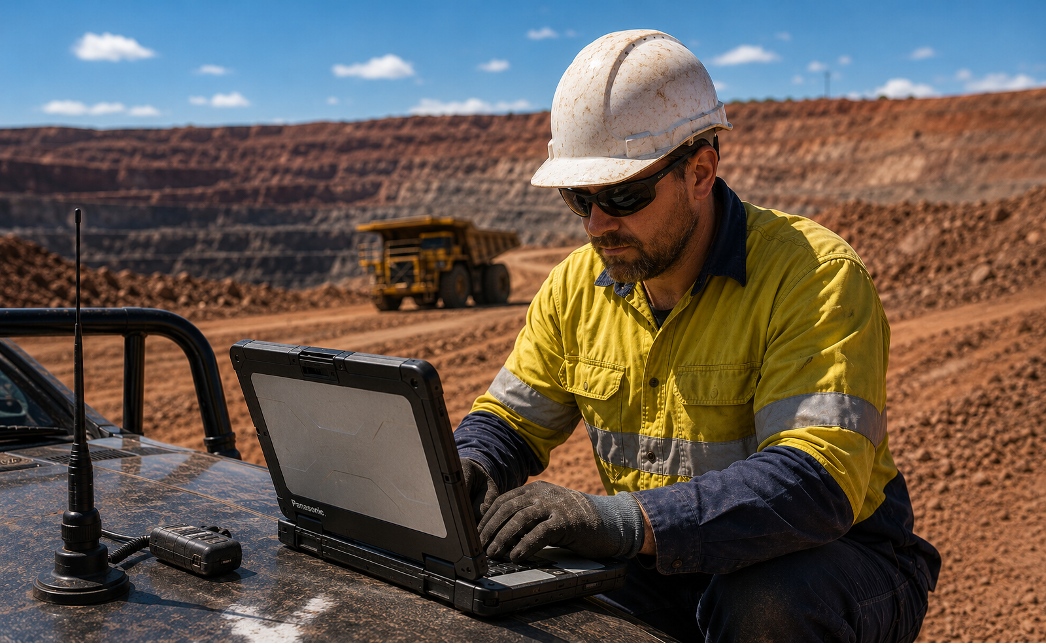
This year, Panasonic Toughbook is celebrating 30 years in the market, and we thought it was the perfect opportunity to shine a light on why it remains one of the most trusted names in rugged computing.
In demanding industries, technology needs to do more than power on and get through the day. It needs to perform reliably in the field, withstand harsh conditions and support productivity without becoming a weak point in daily operations. For Australian organisations working across mining, logistics, field service, government, emergency services and manufacturing, Toughbook has earned its reputation by delivering where standard laptops and tablets often fall short.
At Roaming Technologies, this is exactly the kind of value we focus on. We work with organisations that need rugged, semi-rugged and intrinsically safe technology designed for real operational conditions, not just office use. So while 30 years is an impressive milestone, the real story is what it says about Toughbook: proven durability, trusted field performance and a product range that continues to support teams working in some of the toughest environments.
A Legacy Built on Rugged Performance
Since launching in 1996, Panasonic Toughbook has built a strong reputation as a rugged computing solution for organisations that cannot afford unreliable hardware. Over the past 30 years, Panasonic has continued to refine the Toughbook range to meet the changing needs of field teams, mobile operators and vehicle-based workforces operating in tough, real-world conditions.
That longevity matters because it reflects more than brand recognition. It speaks to decades of product development, practical improvement and proven performance across industries where reliability is critical. In rugged environments, devices do not stay relevant unless they consistently deliver.
For anyone working in demanding industries or exploring rugged technology, Toughbook’s 30-year milestone is a chance to look at why these devices continue to play such an important role in keeping teams productive, connected and protected. You can learn more about Panasonic’s milestone here: Toughbook 30th Anniversary.
Built for Real-World Conditions
One of the biggest reasons organisations choose rugged devices is that the environment itself demands it. In industries such as mining, transport, logistics, utilities and emergency response, devices are not sitting safely on desks all day. They are carried between locations, mounted in vehicles, used outdoors, handled with gloves, and exposed to site conditions that can quickly damage ordinary hardware.
This is where rugged computing proves its value. Panasonic toughbook devices are designed to support these kinds of environments, helping businesses reduce the risk of breakage, device downtime and constant replacement cycles.This is especially relevant in sectors like mining, where the pressure on devices is extreme. In our article A Guide to Rugged Laptops in the Mining Industry, we looked at how harsh site conditions make rugged hardware an operational necessity rather than a nice-to-have. The same principle applies across many industries where workers need dependable technology in the field.
What Makes Toughbook Stand Out
Part of Toughbook’s strength lies in the fact that it is not a one-size-fits-all product. Panasonic has built a broad rugged range that supports different work environments, job roles and mobility requirements. That gives organisations more flexibility when choosing the right device for the task at hand.
Whether the need is for a fully rugged laptop, a detachable tablet, a semi-rugged unit for vehicle use, or a more mobile solution for field inspections, the Toughbook range gives businesses options that are designed around practical use, not just specifications.
To help break that down clearly, here is a simple overview of what makes the range so valuable.
|
Toughbook advantage
|
Why it matters
|
|
Rugged durability
|
Helps devices withstand drops, vibration, dust and harsh conditions
|
|
Reliable field performance
|
Supports teams working in remote, mobile and high-pressure environments
|
|
Long product lifecycle
|
Reduces frequent replacements and helps lower long-term hardware costs
|
|
Flexible form factors
|
Supports different workflows across laptops, tablets and detachable devices
|
|
Better operational continuity
|
Minimises downtime caused by fragile consumer-grade hardware
|
|
Strong integration potential
|
Works well as part of broader vehicle, fleet and field mobility setups
|
For many organisations, these benefits are not secondary. They are central to keeping operations moving efficiently.
Why Rugged Mobility Is More Important Than Ever
Rugged hardware is just as relevant today as it has ever been, and in many ways it has become even more important. Field teams are relying on more digital tools than ever before, including live data, cloud platforms, digital inspections, GPS, diagnostics, reporting systems and integrated communications.
That means the device itself is no longer just a basic work tool. It often sits at the centre of the workflow. If the device fails, the workflow can fail with it. For businesses managing fleets, mobile teams, remote worksites or distributed operations, rugged mobility helps protect that continuity. A dependable device reduces friction, supports consistency, and helps workers stay connected to the systems and information they need.
This is one reason why Roaming Technologies continues to focus on rugged mobility as a broader solution, not just a hardware category. Our role is not simply to supply a product. It is to help customers choose and implement technology that works in the environments they actually operate in.
Built for Australia’s Toughest Industries
In Australia, the value of rugged technology is easy to understand because so many industries work in demanding physical conditions. Mining is one of the clearest examples. Dust, heat, remote locations, heavy vehicles and continuous movement place serious pressure on devices used on site. Rugged hardware helps reduce the risk of failure in exactly those environments.
But the same thinking applies far beyond mining. In logistics, reliable mobile devices help maintain continuity across vehicles, depots and delivery operations. In utilities and field service, technicians need dependable equipment that can travel with them across jobs and weather conditions. In government and defence settings, hardware needs to be secure, durable and suitable for field deployment. In manufacturing, mobility solutions can support inspections, maintenance, reporting and operational visibility across complex environments.
At Roaming Technologies, these are the kinds of industries we support every day. We understand that different environments place different demands on technology, which is why selecting the right rugged device is only one part of the solution.
More Than a Device: Choosing the Right Setup
One of the most important things to understand about rugged computing is that success does not come from the device alone. The best outcomes happen when the technology is matched properly to the workflow, vehicle setup, mounting requirements, power needs, connectivity and long-term support model.
At Roaming Technologies, we do not take a box-moving approach. We work with customers to understand how the device will be used, where it will be used, and what supporting setup is needed to make the deployment effective. That might include docks, mounts, integration accessories, communications hardware or broader mobility infrastructure.
A strong example of this is our Case Study: Rugged Reliability on the Move, which highlights how rugged devices can be deployed successfully when backed by the right integration and support. In projects like these, the hardware matters, but so does the quality of the solution surrounding it.
Choosing and Supporting Rugged Technology in the Real World
Thirty years of Toughbook is an impressive milestone, but the bigger takeaway is what that milestone represents: the ongoing importance of rugged computing and the quality of the devices Panasonic continues to bring to the market. For organisations working in harsh, mobile and high-pressure environments, reliability is never a minor detail. It affects productivity, continuity, support requirements and the ability of teams to work effectively in the field.
While Panasonic builds the devices, successful rugged technology deployments also depend on how those devices are selected, configured and supported. Choosing the right model is important, but so is understanding how it will be used day to day, what conditions it needs to withstand and what level of support is required over its lifecycle.
That is where Roaming Technologies plays an important role. Since 2006, we have worked with Australian organisations to support rugged, semi-rugged and intrinsically safe technology requirements across a range of industries. This experience gives us a practical understanding of the environments these products are used in and the considerations involved when balancing durability, performance and usability.
For anyone evaluating the Panasonic Toughbook or reviewing broader rugged mobility needs, the value is not only in the device itself, but in making sure it suits the environment, workforce and application it is intended for.
If your organisation is reviewing its rugged device strategy or exploring more dependable field-ready technology, give our team a call. We would welcome the opportunity to talk through your options, understand your operating environment and help you find the right setup for your needs.